Wednesday, October 8, 2014

The Church Needs to Step Up on Domestic Violence Too

As public outcry demands that the NFL reform its culture in regard to domestic violence, wouldn’t it be great if during this Domestic Violence Awareness Month we could demand that religious institutions reform also? The sad fact is that religious institutions have usually been more harmful than helpful to the cause. As a pastor who has been speaking out on this issue for over 20 years in Iowa and California, countless women have told me that when they sought help from clergy they were counseled to try harder to please their mates and to bear their suffering silently (like Jesus did) and ultimately remain in the abusive situation because it is the will of God for them to do so. For every Ray Rice that gets suspended, there are hundreds of clergy who deserve to be suspended for such life-endangering counsel.

Far too many survivors of domestic abuse report that they have never heard anyone in their churches say that they deserve to be safe, that God does not will for them to be abused and that domestic abuse and dictatorial relationships are not okay.

The church has often proposed a hierarchical model of family where the husband is encouraged to exercise power and control over his family instead of developing healthy partnerships of mutuality and respect. Some of the greatest damage women suffer is the direct result of men coming home from church believing that they need to make their wives “submit” to their will.

If you are involved in a church or other religious institution you can help. You can learn to recognize the signs of domestic violence and learn how to provide a loving response.  You can check out your church’s teachings about what makes for a healthy relationship and you can make sure that your clergy receive adequate training in responding to domestic violence because for most of us, our seminary training was woefully inadequate. Please hold your clergy and accountable if you hear them spouting off messages that give license to abusers for their behavior. 

Hooray for the NFL in recognizing that it was on the wrong side of the issue, now let’s advocate cultural changes in the institutions that affect more people’s lives than any other.  

Article by Iowa Pastor David Clark in Redlands Daily Facts. 

Monday, February 11, 2013

C'mon Man!


I love the ESPN segments called C'Mon Man! that features NFL players making boneheaded or classless decisions.  C'Mon Man  is a way of saying with exasperation, "You should have known better; keep your head in the game."  Whether you are hitting the quarterback in the head after the whistle, or tweeting your displeasure with the coaching staff, you will earn the derision of ESPN analysts bemoaning your actions saying, "C’Mon, man!"  

Sometimes I think there should be a C'Mon Man! segment for the church. Of course, we’d inclusivize it to C'Mon People because women are equal offenders. Sometimes people of faith get caught running the wrong way down the field and we’d like to say “come on, really?”

For example, we’d call out the pastor who tried to get out of giving a meaningful tip by writing on the check that God only gets 10% so she wasn’t going to give her service any more than that.  Some poor employee of the restaurant wound up getting fired for posting the pastor’s comments online.  
The pastor earned a collective “C'Mon People!” from the church community and she later apologized.  Unfortunately the more she talked about it, the worse it got because she implied that God ordained all the hubbub to increase the number of people that would hear her proclaim the name of Jesus.


She earned what I’d call a “heat of battle” C'mon People designation. She just wasn’t thinking it through. She experienced a lapse. It happens to all of us and it’s humiliating to get called out on it.  Future recipients of the award will want to refer to my page on how to make a proper apology.  

Last week the Come on People! award went to Pastor Rob Morris a Missouri Synod Lutheran minister who wrote an apology letter last week for his role in the prayer vigil in Newtown, Ct. shortly after the shootings.  It was a lovely service of unity, prayer and support. However, Rev. Morris was admonished by denominational leaders and told to apologize publicly for making it look like he was weak on heresy through sharing in a common worship experience. This award goes as much to the “coaching” staff of the church as it does for Pastor Morris who caved in to their insensitive demands.  One wonders about the love chapter in 1 Corinthians 13.  It seems the Mo. Synod Lutherans would have it changed to read: “And now faith, hope and love abide, these three and the greatest of these is doctrinal purity.”  Similarly they’d alter the verses where love is defined as not insisting on your own way.

The good part about the C'Mon People! awards is that they remind us to hold people to a higher standard as we express our grief that the rest of the world looks on the church with dismay instead of respect or admiration. The bad part of the award is the recognition that we’ve all earned our share of nominations to receive it ourselves. “It’s an honor just to be nominated,” say all of the Oscar nominees. You have the honor of being human and fallible.

I’ve even won the C'Mon People! award on occasion--I’m not bragging, just saying. . . .  So, I will go to Ash Wednesday services with all the other common people realizing the need for grace that all people have in common. C'mon, let's go.


Ankeny Christian Church (Disciples of Christ) services will be at 7:00.

Thursday, December 20, 2012

Help, Thanks, Wow: a Guide to Prayer for Newtown

(Photo: Laura Petrecca, USA TODAY)

Immediately the requests were sounded, “Pray for Newtown.”  But what should we pray, exactly?  I think the first prayer we pray is something we might not think of as a prayer at all: “O God.”  Although “O God” is a reflexive exclamation when we hear bad news, it’s also a form of reaching out to something more powerful than we.

At first we don’t even have words to supplement the “O God.” We sit in stunned silence, our minds reeling, imagining horrors, yearning for more detail, an explanation that will help make sense of it. “O God” hangs in the air---and ascends to God.  Romans 8 talks about the Spirit interceding for us “with sighs too deep for words” when we don’t know how to pray. Sighing with the Spirit may be as honest and gentle of a prayer as we can muster.

I found Anne Lamott’s latest book HelpThanks Wow: The Three Essential Prayers to be a wonderful guide to filling in some of the content for my prayers Newtown. She gives us three simple one word prayers that enable deep prayer.

Help. Lamott claims that’s the prayer that comes from deep inside when we feel the most broken, when we know that we don’t have the solutions, that we cannot control very much in this whole world.  To pray, “Help” is to surrender any illusions of control, of security and immunity to suffering to a power greater than one’s self.

So, we pray: Help.  Help God.
  • Help the moms and dads, brothers and sisters, grandparents, aunts, uncles and friends who have lost someone precious to them, who will be haunted by this week forever. 
  • Help them as they endure the site of little caskets and hear the words “earth to earth. . .” 
  • Help them to get through, help them know your identification with their pain and sorrow. Help them to find what they need and who they need in their darkest moments.
  • Help the responders and faculty and parents who have witnessed the awful scene.
  • Help our country figure out how to better protect our children and teachers.
  • Help us when we don’t feel much like lighting the candle of joy to light it anyway.
  • Help us not to become so used to these stories that our hearts become hardened.
  • Help us to pay attention and care for all children who suffer from violence and terror and abuse.

Help.

The second great prayer is Thanks.  There is sort of the selfish-thanks. Thank you that it didn’t happen to my family, my community. But Anne says thanks also develops gratitude for what awful events can reveal–even if they are unpleasant.

  • Thanks that we are reminded of how precious and fragile life really is, and how we take should never take one moment or person in our lives for granted.
  • Thanks that we have a moment to pause and figure out how to do better and care for the most vulnerable.
  • Thanks that a window may have opened for our nation to have a more mature conversation about a culture of violence and guns and access to mental health services.
  • Thanks the opportunity to renew our commitment to be of service, to make the world less volatile by being people who follow the ways of peace, truth and justice, who do not give in to darkness.


Wow is the prayer of paying attention and seeing the good in the world. In spite of the tragic, there are still dimensions of life that take our breath away.


  • Wow–it takes our breath away to realize the heroism of the principal and teachers who sacrificed their own lives for the children.
  • I see law enforcement officers who rush into the unknown putting themselves in harm’s way. Wow. 
  • I’m blown away by the care medical examiners and others who do sign up to look at awful things so that the truth might be revealed.
  • Wow–even though our hearts are broken, we have a chance to act, to not let the darkness of the world to overwhelm and overtake us.
  • Wow–we are amazed at the children that we see at this time of year especially filled with a sense of trust, wonder, and love for life.
  • Wow–even though the worst has happened, there is still more good than evil in the world, there is still a chance to push the darkness out of our hearts and embrace the light.

If you are looking for a model to improve your prayer life and earnestly pray for Newtown, three little words feel just about right. Help. Thanks. Wow.

Saturday, December 15, 2012

The Dave Clark Thousands

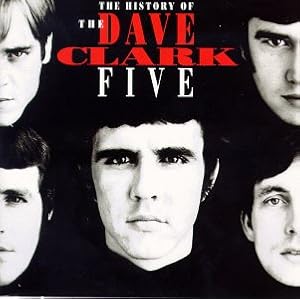
Happy birthday to Dave Clark of the Dave Clark Five (DC5)!  


I’m not saying that our Abraham Lincoln High School football coaches weren’t bright, it’s just that they didn’t figure out that there were two Dave Clark’s on the football team until they drafted the depth chart and couldn’t figure out how one guy could simultaneously play guard and tight-end.  (No wonder we didn’t win very often).

In our little school, there were three of us, three David J. Clarks. I’m convinced that I still carry David James Clark’s ‘B’ instead of my ‘A’ on my official transcript--not that I’ve been holding a grudge all this time. But the fact that our history teacher was also a football coach does add credibility to my suspicion.

I’ve met a lot of David Clarks who are my age. Apparently the DC5 was so popular that when our parents produced male offspring they had a readily available name. I read that if you are a male child born into a Clark family during the ‘60’s you have a one-in-six chance of being named David.  The Dave Clark Five became the Dave Clark thousands. For the record, my parents say that I was named after three Davids: King David of the Bible, Dave Clark of the DC5, and David Nelson from Ozzie and Harriet (my brother was named Ricky).

People give away their ages all the time. I know this because when I meet them, people who are my parent’s age will invariably mention the DC5.  When I was the guest preacher for Dayna Kinkade at the Norwalk Christian Church, people of a certain age requested we sing “Glad All Over” as our opening hymn.  I’ve never minded carrying the same name as the famous Dave Clark because I’ve been given an easy way to begin conversations with a whole generation of folks.  As my hair grays, I worry that new people I meet will be disappointed when they learn that I’m not that Dave Clark.  I’m beginning to identify with ESPN’s commercial about people getting their hopes dashed when they get to meet Michael Jordan, who turns out to be a middle-aged pudgy white guy.


For those of you who are too young to know about the DC5, just think of a cleaner cut version of the early Beatles who never evolved much out of their 1964 style.  Yet, Dave Clark was part of a revolution that transformed music as we know it. As a way of celebrating the Rock-n-Roll Hall of Famer’s 70th birthday, may all of us who bear his name work toward transforming our little part’s of the world into better places.If one of us plays guard and another TE and another quarterback and so on, maybe we could move the ball down the field a bit and make the world a little more user friendly.

Wednesday, December 12, 2012

Praying with Candles

Here is an Advent reflection I wrote that the Huffington Post published today.  

Advent Reflection
Dave Clark, Ankeny Christian Church

When I stumbled across a district-wide church newsletter, I wondered if anyone appreciated the irony of an article entitled, Twenty-One Things to Do to Simplify Advent.  Great, that’s all I needed--twenty-one more things to do. Sadly, I’ve tried at least twelve of those suggestions and still find myself overwhelmed. When the frenetic pace gets too much, I slip away from the piles of stuff to do on my desk and retreat to a back room and plop down the box of individual Christmas candles we use each year.

Tending to the candles is one of those messy, pedestrian tasks that they never tell you about in seminary.  Yet, I love sitting with a wastebasket between my knees using my thumb to pry off chunks of wax encrusted to the sides of the salvageable candles.  My favorite part of Christmas is lighting those candles while singing Silent Night; my favorite part of Advent is preparing those candles for that one holy moment.

It’s an act of prayerful imagination as I wonder who may have held the candle I’m examining.  What silent prayers were offered while basking in the soft orange-glow of this candle?  What prayers went up while wax flowed down?  Was someone praying for a miracle, a healed relationship, the ability to let go? Was it held by someone hoping for a pregnancy or one hoping that she wasn’t pregnant? Was it someone who got engaged that very night or someone who knew it would be his or her last time to light a Christmas candle--ever? Was it someone deciding to give faith a chance?

I recall last year’s Christmas Eve service and remember the faces of people in our church, how they looked at peace when we lit the candles. I consider the wonders and tragedies they’ve experienced through the year and my heart aches for those with seemingly unanswered prayers. I  hope that some sense of Christmas peace may sustain them, that Immanuel, “God with us” will mean something to them in a real way, an incarnate way.

As I roll a little candle between my palms, I cannot help but wonder who will hold it this year and how the new pray-er will be connected to the person who held the candle last year.  In the community of faith all our prayers are one.  Whenever I try to make Advent more complicated than that, I lose my way and wind up feeling guilty for all that I haven’t done.  Playing, or should I say praying with the candles helps me remember that was never about my doing anyway.

Friday, December 7, 2012

The Scandal of Singing Christmas Carols During Advent


If you were gauging the expressions of my clergy colleagues, you might have thought I had announced that I’d poisoned their coffee.  Eyes widened, looks of utter disgust crossed their faces as they reflexively pushed away from the table. I think they felt betrayed that one of their own, a mainline preacher, had capitulated to culture and allowed the congregation to sing Christmas carols in Advent. (O the humanity!  You’d think with all the problems of the world, we’d find more interesting things to rouse our indignation.) Not only had I allowed premature caroling, I had encouraged it and delighted in it.


I pretended to listen to their protests, but they were all too familiar. I’d learned in seminary that Advent is the season of waiting and penitential preparation. Singing carols in worship jumps the gun and we miss the spiritual benefits accrued from the discipline of waiting. It’s okay to sing the songs outside of church, but If we express too much joy so early in the season, then we will demonstrate that we are not sufficiently sorry for our sins. There are lots of other reasons that don't really have much to do with scripture, just preservation of a tradition that only goes back a few centuries.

In my first year out of seminary, I refused to select any carols until Christmas Eve. People were hurt, they felt put-out that they weren’t allowed to use these songs to accentuate as part of their worship. We waited until Christmas Eve to sing a few verses of several carols and waited until the lowest attended Sunday of the church year (the Sunday following Christmas) to sing the rest. It felt like we were all somewhat diminished by the experience. After that experience, I swore off liturgical correctness in favor helping the congregation to express its faith more exuberantly.

Hymnals are designed with a load of really great Christmas music and only a handful of singable Advent tunes. If a congregation waits until Christmas and the Sunday following Christmas to sing these songs in worship, it will only skim the surface of some of the most vital and moving verse that inspires our faith. What a waste!

There is plenty of time to focus on the discipline of waiting. There really isn’t much going on in the season after Pentecost. All we are doing is waiting for Christmas--lets call that season “Advent” from now on and I’ll promise not to sing any carols. But for now I’m going to belt out “O Holy Night in my car and Joy to the World in the sanctuary. 


I mean as they say on ESPN, “C’mmon, man.” Jesus probably wasn’t born on December 25th anyway. The church adopted that date to bring Christ into the pagan culture’s celebrations. If you haven’t noticed culture is celebrating its holiday during the Advent season, maybe we should try to introduce Christmas back into the pagan culture all over again.

Friday, November 30, 2012

Nattering Nabobs of Negativism


Sounding distinctly above the jet-engine-like roar of the cappuccino machine was the booming voice of a silver-haired man who wore a large chrome cross around his neck.  Although his companion signaled (repeatedly) for him to lower the decibels and use his “inside-a-small-coffee shop voice” instead of his “outside drill sergeant voice” he paid no attention and transformed the cozy atmosphere into a torture chamber. Instead of whips and chains, this guy used words, lots of negative, vitriolic words and attitudes on everything from fellow church members to the government to society in general.

All the other customers left after it was apparent he wouldn’t shut up and it seemed no one thought it worth the effort to engage him and ask him to pipe down. I was stuck there, waiting for a ride thinking about what an awful witness for faith he was as he said “everything is going to hell in a hand-basket.”  I wished that he would at least have the decency to remove the cross from his neck.

Many people of faith (conservatives and liberals) truly believe that the world and American culture is getting worse every day. They look for evidence that reinforces a fundamentally negative worldview. Some give up trying to make positive change and simply adopt an attitude of looking forward to the end when God will straighten everything out.

I’m reminded of the famous line written by William Safire and spoken by then vice-president Spiro Agnew in which he talked about the press. The same could be said of way too many church folk.

“In the United States today, we have more than our share of the nattering nabobs of negativism. They have formed their own 4-H Club… hopeless, hysterical hypochondriacs of history.”

Spiro Agnew


As I look around the American church today, I think it’s clear that the Nattering Nabobs have taken over and are killing the church because we all come across sounding like angry old grumps who don’t offer one bit of credible good news.

Many Things are Getting Better, not Worse


According to a recent CNN article by Steven Johnson:

Over the past two decades, what have the U.S. trends been for the following important measures of social health: high school dropout rates, college enrollment, juvenile crime, drunken driving, traffic deaths, infant mortality, life expectancy, per capita gasoline consumption, workplace injuries, air pollution, divorce, male-female wage equality, charitable giving, voter turnout, per capita GDP and teen pregnancy?

The answer for all of them is the same: The trend is positive. Almost all those varied metrics of social wellness have improved by more than 20% over the past two decades. And that's not counting the myriad small wonders of modern medicine that have improved our quality of life as well as our longevity: the anti-depressants and insulin pumps and quadruple bypasses.


Steven Johnson

Americans enjoy longer, healthier lives in more stable families and communities than we did 20 years ago. But other than the crime trends, these facts are rarely reported or shared via word-of-mouth channels.

There’s Never Been a Better Time to Live


There is not idyllic past where everything was perfect. Think about the past, torture, slavery, inequality, slaves, the horrors of child labor, the nonrecognition of human rights, mistreatment of those with mental and physical disabilities, etc. Things are not worse but our expectations are greater, for the very good reason that the seed that faithful people have planted which calling for more user-friendly world have taken root.  There have been famines and droughts; earthquakes and tsunamis; recessions and depressions; hurricanes and tornados but there has been so much goodwill and outpouring of support from across the globe whenever something likes this happens.

Mr Johnson says the media has to find ways of better telling the story of the good that is happening and find ways to accentuate it. I think the same is true for the church.

Positive People Doing God’s Work


Yes there is still much work to be done, there is much wrong with the world and it would be naive to think we are on a march of steady progress to utopia. It seems the first job of a person of faith is to focus on the positive action that can be accomplished instead of becoming just another Nattering Nabob.  (I don’t really know what a nabob is, but I’m fairly certain that it doesn’t have much to do with discipleship).   The mission statement of the church I serve was developed prior to my arrival and it helps us re-frame our thinking. Instead of believing that the world is falling apart, we can endeavor to be: Positive People Doing God's Work.  


Friday, November 23, 2012

Lincoln Movie: Does the End Justify the Means?

The Moral Conundrum of Spielberg’s Lincoln.

After the brutally long season of political campaigning where standards of truth-telling were constantly butchered and ignored, I hoped that spending 2 1/2 hours soaking in Steven Spielberg’s movie about “Honest Abe” would purge some of the cynicism about American politics from my soul. I watched the movie in a crowded Texas theater and during the previews, wondered what it would be like to watch Lincoln in a location where many are actively petitioning to secede from the union and some still seem to be fighting the Civil War--er “War of Northern Aggression.”  How uncomfortable would this experience be for them? Would they boo when the slaves were freed or cheer when Lincoln was assassinated?  Did they know what they were getting into?

As the plot unfolded, it didn’t take long to realize that I didn’t know what I was getting into, that with every frame of the movie I was growing more and more uneasy and disillusioned with my hero. I had known that our 16th president wasn’t a consistent champion of racial equality. He had even remarked that if he could save the union without freeing a single slave, he’d do it. But that was never a real option. What I knew was that despite his misgivings he ended up on the right side of history and did the right thing when it counted the most and paid the ultimate price for it.

The film hit me in the gut with images of Lincoln intentionally misleading congress, orchestrating a scheme to bribe representatives with government positions to pass the 13th amendment, which freed the slaves. The sense of corruption was palpable. At several points, I yearned for the “better angels” of Abraham Lincoln’s character to rise up and show him a better path but at every point he doubles-down, using every trick up his sleeve. He comes across as being as shrewd and calculating as Michael Corleone from The Godfather. Despite his innate humility, he realizes that as president he is “clothed with immense power” and he intends to use it. Spielberg casts the dirty tricks as comic relief within the darkness of the time, but it was more nauseating than funny.


Do the Ends Justify the Means?

I know of no credible ethical system which suggests that the ends justify the means.  Eventually one goes too far, falling into the delusion that one is beyond the law, beyond the normal rules of ethics. In our time, any politician caught doing what Lincoln did would not only get kicked out of office, he or she would rightly spend time behind bars. Yet, the hard truth is that Lincoln was right. History opened one small window of opportunity in which to pass the amendment prior to the war’s end. If he hadn’t employed sleazeball tactics, he never would have passed the amendment. All subsequent efforts for civil rights and equality rest on the foundation of the amendment to free the slaves. I cannot imagine how worse our history would be without passage of that amendment.    

Maybe the point of the movie is to say: grow up. This happens all the time, it’s how legislation always gets passed. Even the most noble legislation that we’ve ever passed only occurred because our most revered president got down in the mud and played to the worst elements of human nature.  If the old School House Rock commercial showed how a bill really becomes a law, it would have been banned from children’s programming. Yet we have this ideal, this notion that it could be better, it should be better and we should always strive to “perfect our union.”

The Moral Arc of the Universe

Martin Luther King Jr. said that the moral arc of the universe is long, but it bends toward justice. Over time, change gets made and we improve--justice works its way into our lives. It’s the grand hope that we must have to affect change. Sometimes we fail to act because we know our actions are flawed; our intentions aren’t perfect, we benefit from the labors of someone else, we “reap where we did not sow.”  Lincoln and King are woven together because of Lincoln’s choice to use his political schemes--they bent the arc. The real question that comes to us when we see our reflections in that arc is: what will we do? Will we have the courage to act?


Lincoln’s Warts

The essence of the entire movie is spoken by Thaddeus Stevens (Tommy Lee Jones) when he says that the most liberating constitutional amendment in history had been “passed by corruption, aided and abetted by the purest man in America.”  After watching his methods for 2 and 1/2 hours, “pure” isn’t the first word that comes to mind. His purity wasn’t a moral purity; it was more about his intention to do what he felt was right for the country--no matter what it cost.

As a society, we keep putting people on pedestals where they cannot possibly remain. No one is that good, not even Lincoln. Yes, he accomplished one of the most important triumphs in for the history of humanity, but he also employed morally repugnant means to accomplish this feat. We know there are no perfect people; so why does it hurt so much when we take a peek behind the curtain and see our idols as they really are?

In the movie, Lincoln wishes he could travel to the holy land to walk where David and Solomon walked. It was an interesting twist to remind us of these two biblical heroes who were fundamentally flawed. As my seminary professor said the Bible shows us these men “warts and all.” Scripture doesn’t shy away from revealing that David committed adultery and murder and Solomon subjugated his own people into slavery. Similarly, our history does not need to deify Lincoln, pretending his only wart was on his upper lip. We can walk away from more honest presentations of him still feeling inspired to do what we can to bend the moral arc of the universe toward justice.


Thursday, November 15, 2012

Mike Huckabee Picking and Choosing for Political Gain

A telling moment occurred when Jon Stewart interviewed Gov. Mike Huckabee regarding a political television commercial that Huckabee narrated. A tight smile stretched across Gov. Mike Huckabee’s face when Jon Stewart asked him if gay marriage and abortion are the only things that God cares about in American politics. What about poverty and politicians who’d cut programs for the poor? Huckabee tried swat away the pesky question by saying it was only a sixty second commercial and “you have to pick and choose.”  Interview

Why is it that the religious right never chooses to pick out the scripture passages regarding the poor, the vulnerable, the immigrants in our land, those who suffer under oppressive working conditions? The number of times these themes arise in scripture are like a mountain compared to the molehill of verses that link (indirectly at best) to gay marriage or abortion. Gov. Huckabee’s smile conceals the fact that he is well aware of this fact. Instead of following scripture’s lead, he uses hot-button issues in a commercial that is designed to drive Christians to the polls to get them to vote the way that Huckabee wants them to vote.

What does it say about evangelicalism when they never to pick and choose to be on the side of the poor and disenfranchised? Why are they always more motivated by imposing their views of morality instead of living out their own morality in such an attractive way that others will want to become part of it, too?

The evangelical ads could not be more manipulative and I believe should be classified as a case of invoking God’s name to advance a narrow political agenda. Such vacuous uses of God’s name are what is at the heart of the Fourth Commandment in which the Israelites are told not to take the Lord’s name in vain (literally “vaporous manner”). Perhaps those who produced the ad should be more concerned about their own violations of God’s commands than they are about what other people do.

The heart of the Stewart interview was the question of whether the ad implied people who voted for Democrats were going to hell. It’s easy to see how one could view it that way, although Huckabee strongly disagreed saying that any biblically literate Christian would understand that the images referred to First Corinthians 10. The Governor couldn’t have been any more smug in the way he said this. What’s hilarious is that Gov. Huckabee got it wrong. There is nothing even remotely close to those images in First Corinthians 10.

Although he invoked First Corinthians 10 many times, what he meant was First Corinthians 3 verses 10 and following. But the former Baptist preacher certainly stretches the text and uses it out of context for the commercial. First Corinthians 3 seems to be about a divided Christian community learning to tolerate differences amongst them and letting God settle it out in the end. The epistle goes on to urge these quarrelsome Christians to start focusing more on love and community than advancing each one’s narrow agenda. That’s the kind of conversation that seems more productive than a conversation about fire. It might even put a nice smile on the Huckabee’s face.


Friday, November 9, 2012

The Walking Dead

Walking Dead

There’s just something about a good zombie show that forces me to think more deeply about culture, life, death and what we will do to survive. I cannot watch one of these shows without thinking of St. Irenaeus of Lyon who taught that a human being “fully alive” is “the glory of God.” Zombies remind me that being fully alive has to mean something more than shuffling through life uncritically, unaffected by what is happening around me, mechanically pursuing my own appetites at the expense of my neighbor. The classic zombie movie, Dawn of the Dead, effectively employed the metaphor of a shopping mall besieged by the undead as a way of reminding us that absorption into a purely consumerist culture is evidence of being something other than fully alive. What we seek for true life cannot be purchased at the mall.

It’s not the gore and violence in the genre that appeals to me—some directors are so over-the-top with grisly special-effects that they obscure the deeper issues at stake. What does it mean to be alive? AMC’s The Walking Dead is a show with excellent storytelling that embraces the requisite gruesomeness without making killing zombies the point of the show.

A recent episode had characters wondering if “an echo” of the person’s memory and identity might be trapped within the mind of a zombie, that he or she still has some consciousness in there somewhere. It set me to thinking about all the people I’ve loved who had Alzheimer’s disease or other forms of dementia. Was there something of my grandfather still in that shell of his body when he no longer recognized his own name?

I love the concept of “an echo” because I get the sense that sometimes I hear an echo of who I once was rambling around in my head. The adolescent, inappropriate, silly, insecure self of long ago makes his voice heard in my head and I have to remember that he will always be a part of my life, but he doesn’t get to control my life.
The notion of an echo reminded of the funeral poem Afterglow that makes me wonder how my spirit will echo around for a while after I’m dead.

Afterglow
I’d like the memory of me
to be a happy one.
I’d like to leave an afterglow
of smiles when life is done,
I’d like to leave an echo
whispering softly down the ways,
Of happy times and laughing
times and bright and
summer days.
I’d like the tears of those who
grieve, to dry before the sun,
Of happy memories that I leave
When life is done.
~Helen Lowrie Marshall
(From her book of poetry, Close to the Heart )

Of course the trick is to be fully alive while you are still breathing so that there can be something to echo after your gone. Live well my friends, there is a lot of life to be enjoyed.

http://accdoc.org/?p=3444

Tuesday, November 6, 2012

Election Day

Election Day As we head to the polls today I pray that we may find our way forward and discover a unity that leads us to tackle our real problems together. I heard Springsteen talking about how hard it is for folks who are caught in the gap between the American Dream and their own reality. I believe people will need to come together in new ways to fix the gap. Voting is not the sum of our duty as citizens, it's the fundamental first step. It's up to all of us to be the change we want to see.

Thursday, August 25, 2011

Spirituality of Terroir

Two years ago three colleagues and I were awarded a grant from the College of Pastoral Leaders to study the spirituality of terrioir. Not terror, terroir. The term comes from a french wine-making concept that means "taste of place." Terroir helps explain how wine produced in one location tastes different than one that comes from a different place. Both wines can come from the exact same type of grape, but they have radical differences in flavor. The type of soil and other environmental factors play a significant role. The concept of terroir is expanding across the foodie movement. Many top chefs try to find local foods and their desire is to let the flavors emerge. Chefs, organic farmers and winemakers are all speaking the same language. They say humbly, "My job is to get out of the way and let food do it's thing."

The problem with most food that is produced today is similar to the problems ruining the church. Today most of our foods are over-processed. The goal is not to let local flavors burst forth from different regions. Rather the goal is to create a substance that can be standardized and easily transportable. One cannot say, "The 2009 Velveeta produced a earthy undertones that we haven't tasted since the 1999 Cheez Whiz." The result of all of this processing is that most of our diets are based on foods cannot nourish or delight us. For example, you've probably noticed that one cannot purchase a decent tomato from a grocery store. In order to ship the fruit, it needs to have a thick skin and the thicker the skin, the less flavorful. In effect, we are over-fed and under-nourished. We crave for more than our food is providing so we eat more and are less satisfied.

Is the analogy apt for what is happening in the church? Many churches are losing their local flavor and beginning to look like every other church. Drive around town and you will see churches using the same Vacation Bible School curriculum. The church has simply become a consumer of pre-packaged programs for evangelism, small groups, stewardship, contemporary worship formats, you name it. We are forever looking for a magic bullet. We don't want to spend time creating something ourselves if something already exists and was written by professionals who had more time to devote to the project. With so many pre-packaged programs, are congregations in danger of becoming like local franchises of larger chains? Increasingly, denominational affiliation has less to do with the flavor of a church than the publishing houses of the programs that churches purchase.

Most successful church programs are not successful because they were purchased from somewhere else. They were successful because they grew out of a need in a local setting and lay people in the church decided to act. The really satisfying stuff grows out of local people sensing what is needed in their neighborhoods, their communities, their members. The good stuff has a terroir that cannot be duplicated and mass produced. Wine producers know that each variety of grape grows best in specific kinds of soil and climate conditions. You can't grow a world-class Pinot Noir in Iowa because the climate is too warm and the soil is too rich. But in Oregon the conditions are perfect. On the other hand, there are some varieties you dare not try in Oregon. If an Iowa farmer looked at the Pinot Soil, he'd say it's no good. Corn would never grow in it. However, the poor soil in Oregon makes the vines sink its roots deeper into the bedrock. The result is that the stress on the vine makes it go deep enough to pull out the minerals that give the wine a complex and satisfying taste.

It seems to me that any congregation that wants to produce a high quality ministry should ask terroir kinds of questions. Who is in our neighborhood? What are the cultural conditions around us? What grows well here? What are the gifts of our congregation? When we are stressed by lack of participation, funds, originality or conflict, do we let our roots sink deeper or do we throw up our hands in despair? Most of the answers our churches are seeking come not from a publishing house, but from the neighborhood and congregation itself. Taste and see.

Rev. Tim Diebel and I will lead a workshop on this subject at the School for Congregational Learners at West Des Moines Christian Church (Disciples of Christ) on Saturday, August 27.

Tuesday, August 9, 2011

Breaking Bad part 2

Breaking Bad
In hit TV series, Breaking Bad, Walter White’s slip into moral morass is a brilliant character study that highlights the human capacity for self-deception. In the beginning, we see Walter making noble sacrifices. He has the talent to make big bucks as a world-class scientist; instead he teaches high school chemistry. In a segment as powerful as any I’ve ever seen on screen, Walter chooses to undergo chemo-therapy that he doesn’t want because he empathizes so thoroughly with his wife’s needs.
His family desires that he extend his life by going through the treatment, but Walter makes a very compelling case that he needs to be thinking about quality of life and how he wants to be remembered. He wants to give all his energy in the time that he has left to those he loves instead of fighting the side-effects of chemo. He doesn’t want to leave his family destitute from uninsured medical bills. It is his decision to make, his body, his life. He announces his decision. In the next scene he wakes up alone in bed. No words are said. He looks at his wife’s night stand and sees the books she has been reading. She is pregnant and reading books about healthy babies. She has a special-needs son and there are books on his needs. On top of the stack is a book about battling cancer through healthy eating. Walter sees a jar of her lotion unscrews the cap and breathes it in. He shuffles silently to the kitchen and gently embraces his wife from behind. She is clearly frustrated, scouring the dishes. He simply whispers, “I’ll do it….I’ll get the treatments.” It is an act of pure love and tremendous self-sacrifice.
However, Walter decides that he will manufacture crystal meth to pay for the treatments. Here begins the tragedy of his moral life. Walter deludes himself into believing that all his actions can be justified because he is doing them for a higher purpose—pure love of his family. At first he is uneasy with the “ends-justifies the means” rationalizations. The decision to cook meth leads him into a violent and shadowy underworld where he is compelled toward deception and violence. In order to keep his newly found secret life a secret and to avoid being killed by drug lords, he keeps making unethical decisions all in the name of his noble effort to go through treatment and provide for his family.
He dare not hold the mirror up to his face to see what he has become. He dare not explore the moral rot too closely. Ever decision has consequences and leads him to more bad choices. We know it cannot end well for him.
I wonder about this ability to deceive ourselves. Walter is not alone. How many people chip away at their integrity every day? They don’t blow the whistle at work so that they can keep their income and provide for their families. They are absent from family functions because they are focused on making money for their family. We tend to think of ourselves as more noble than we ought.
During the show, it becomes clear that Walter likes to think he is doing bad things for a higher good. But he’s not. There are always choices for him. All choices have consequences. Walter breaks bad for many reasons. His new life is more exciting—even if it is dangerous. He can feel powerful and commanding instead of feeling like an uninteresting love and boring chemistry teacher. He feels more alive than ever and it covers regrets from other decisions he’s made.
Overall, the show is a summons for each of us to hold the mirror up and ask about our real motivations. What do we get out of the decisions we are making? Is it possible that we are not as noble as we want everyone around us to believe? Walter keeps breaking bad. We look at him so that we can choose to do otherwise and break toward the good. It’s amazing to think that every decision we make has a role in determining what kind of person we will become. Choose well. The Rev. Dave Clark Iowa.

Friday, August 5, 2011

Breaking Bad pt. I

What would you do if you discovered you were dying of lung cancer, had crappy insurance, a mundane marriage and career, a special needs child and another on the way? What if you felt like situations beyond your control (e.g., the economy, needs of your family, etc.) determined the shape of your life more than your own conscious decisions? The clock is ticking toward your end and you’ve never felt fully alive. There’s no money for treatment that may extend your life for a few months. You choose not to go through with the treatment. But your family begs you to change your mind.

AMC’s Breaking Bad shows Walter White’s wrestling with the issues of choice, sacrifice, morality and what it means to be a man. Walt makes a truly noble sacrifice out of love for his family to undergo the treatment. He cannot handle the thought that his death and puny pension will leave his family destitute when he’s gone. But he won’t accept charity—he feels that he must earn whatever he receives.

This is when Walt decides to “break bad.” To break bad is to choose to go to the dark side. He becomes a criminal. This is not your usual anti-hero show. Walt supplements his income as a high school chemistry teacher by cooking meth. Although he had always led an upright life and his brother-in-law is a DEA agent, Walt is lured by the big bucks trading hands every day in the drug culture. He produces meth in order to provide for his family; or so he tells himself.

Breaking Bad shows the moral decay of a decent man. It does not glamorize the drug culture—quite the opposite actually. Once he gets in, forces conspire to keep him involved. The series shows the effects of meth on the mind, body and spirit. It shows children of addicts, the crime, corruption and grisly violence that anchor this shadowy world. The lead character becomes more reprehensible with every episode and his moral decay is creeping in to the lives everyone he touches. It’s amazing that anyone would want to watch a show like this. But I love it!

There is a lot to love. The writing is superb. The acting is amazing. Bryan Cranston (Walt) won best actor Emmy for each of the 3 seasons. The cinematography is amazing, the sets believable and the comedy is spot on. But what I really love is that it makes me think. The show is forever presenting moral issues and the consequences of decisions that are motivated out of fear, regret and greed. The show is not preachy, but I’m a preacher and I want to reflect on some of the lessons we can learn from Walter.

Just to get it out of the way, I will just mention the obvious lessons: “Drugs are bad. Mmmmkay?” So is lying and killing. Once you start a secret life, the lies are unending and will trip you up. There is more to life than money and success. You need to have a moral center. I’m drawn to examining the subtle beliefs that are at the root of Walter’s demise. I’ll explore one now and more in the next post.

Walter believes that the primary responsibility of a man is to provide for the physical needs of his family. Hasn’t this always been the unspoken rule? Hasn’t it been built into our genes from caveman days? Walt knows he cannot provide for his family when he is dead. His treatment on a Chemistry teacher’s salary will leave them burdened with debt. This fact makes him believe that he has failed in his primary responsibility to his family. He cannot bear to let them down; he cannot live with his own sense of failure.

This dynamic rings true. Want to know why a pink slip or a downturn in the economy or an unexpected bill is so devastating to a man? It’s not because there is less money for “toys.” It’s more than that. We feel threatened. We may fail at our primary responsibility to provide safety, food, shelter and basic financial security for our loved ones. To feel like you have failed there, makes one feel like he has failed as a human being. It’s more than toys, men lose themselves at the deepest level. When so threatened, like Walter, we are capable of darker things than we’d ever believed.

“Breaking good” (turning to a good life) means that we have to break the myth of primary responsibility. Sometimes we panic and feel like we can never provide enough for those around us. What if the economy tanks? What if there is an uninsured condition, accident, etc.? Suddenly there is no such thing as “enough.” Walt is asked how much money he needs to provide for his family and he simply answers, “More.” We live in a time when men do not have to feel the burden of being the sole providers.

Too many men have thought that if they provided financial resources that was enough. More important than any amount of money we can provide for our families is our time, our example, our honesty, compassion and love.